Market statistics
- Total volume
- $4.2M
- 24h volume
- $866K
- Liquidity
- $46K
- Open interest
- $208K
- Comments
- 57
Platform comparison
| Platform | YES odds | NO odds | Fee | KYC | Settlement | |
|---|---|---|---|---|---|---|
Polymarket (via PolyGram) Pick polygram.ink (preferred broker) |
0% | 100% | 0% (USDC on-chain) | No-KYC up to $1,500 | USDC, auto via UMA oracle | Place a position → |
Polymarket (direct) polymarket.com |
0% | 100% | 0% | Geo-blocked in US/UK/EU | USDC, on-chain | Place a position → |
Kalshi kalshi.com |
— | — | Up to 7% per trade | US-only, KYC required | USD | Place a position → |
Betfair Exchange betfair.com |
— | — | 2-5% commission | Full KYC from first trade | GBP / EUR | Place a position → |
Manifold Markets manifold.markets |
— | — | Play-money (mana) | None — play-money | Mana (no cash-out) | Place a position → |
Available prediction outcomes (3)
Sorted by descending live probability. Click any outcome to trade it on PolyGram.
Market context
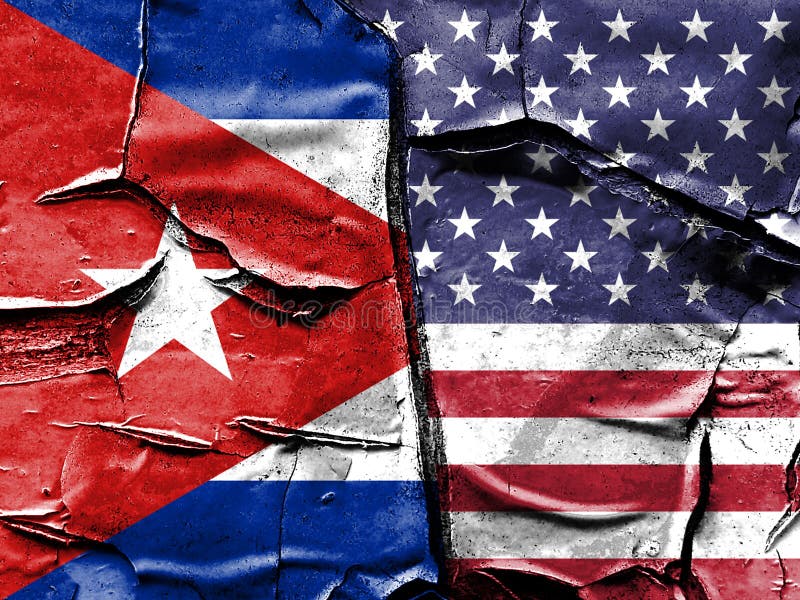
A US military strike on Cuban territory using aerial weapons—drones, missiles, or air strikes—remains an extraordinarily low-probability event within the 2026 settlement window. The last direct US military action against Cuba occurred during the 1961 Bay of Pigs invasion, now over six decades past. Since then, despite periodic diplomatic tensions, economic sanctions, and rhetorical escalation from successive administrations, no sitting US president has authorised kinetic strikes on the island. The Cuban Missile Crisis of 1962 brought the superpowers to the brink but resolved through negotiation rather than military action.
Historical precedent suggests the threshold for such action is extraordinarily high. The US has maintained a de facto policy of containment and isolation rather than direct military intervention, even during periods of heightened rhetoric. Recent administrations have focused on sanctions regimes and diplomatic pressure. For traders building conditional logic or automated monitoring systems, the relevant catalysts would centre on extraordinary geopolitical shifts: a direct attack on US territory originating from Cuba, a dramatic escalation in Cuban military capability, or a fundamental realignment of US strategic doctrine. Current news cycles show no movement toward such scenarios; the Biden administration has maintained existing Cuba policy frameworks without escalatory rhetoric.
Programmatically, this market functions as a tail-risk hedge rather than a directional trade. Monitoring would require tracking US military posture statements, presidential rhetoric shifts, and any credible reporting of Cuban military provocations—events with negligible probability density in the near term but non-zero tail risk. The 0% crowd probability reflects rational assessment of historical patterns and current geopolitical stability rather than certainty.
Wikipedia Context
-
United States Armed Forces
The United States Armed Forces are the military forces of the United States. United States federal law establishes six armed forces: the Army, Marine Corps, Navy, Air Force, Space Force, and Coast Guard, each assigned specific roles and operational domains. With the exception of the Coast Guard, which operates under the Department of Homeland Security (DHS)
-
US military watches
US military watches are watches that are issued to US military personnel.
-
 War in Afghanistan (2001–2021)
The war in Afghanistan was a prolonged armed conflict lasting from 2001 to 2021. It began with an invasion by a United States–led coalition under the name Operation Enduring Freedom in response to the September 11 attacks (9/11) carried out by the Taliban-allied and Afghanistan-based al-Qaeda. The Taliban were expelled from major population centers by Americ
-
 2003 invasion of Iraq
The 2003 invasion of Iraq was the first stage of the Iraq War. The invasion began on 20 March 2003 and lasted just over one month, including 26 days of major combat operations. The invasion was conducted by a United States-led coalition of mainly American, British, Australian, and Polish troops.
Methodology
This page is a comparison snapshot: one live quote, four reference venues with their key attributes, and a single execution path — every trade button routes to PolyGram, which mirrors the Polymarket order book directly.
Resolution & payout
Polymarket-based markets settle through the UMA Optimistic Oracle on Polygon. A proposer submits the outcome, a two-hour challenge window opens, and unchallenged proposals finalise the resolution. Payouts settle automatically in USDC the moment the result is final — no bookmaker, no delay.
Kalshi-based markets settle in USD via the CFTC-regulated clearinghouse. Betfair Exchange settles in GBP/EUR net of commission. Manifold is play-money and does not pay out real funds.
FAQ
- Is this market available outside the US?
- Polymarket itself is geo-blocked in the US/UK/EU. Always check the legal status of prediction markets in your jurisdiction before trading.
- How does resolution work?
- Through the UMA Optimistic Oracle on Polygon: a proposer submits the outcome, a two-hour challenge window opens, and USDC payouts settle automatically once the result is final.
- What's the difference between YES and NO shares?
- A YES share pays $1.00 if the event happens, $0 otherwise. A NO share pays $1.00 if the event doesn't happen. The market price between 0¢ and 100¢ is the implied probability.
- What does Polymarket cost to trade?
- Polymarket itself charges 0% — the only cost is the Polygon network fee, typically under $0.01 per transaction. Off-chain venues like Kalshi or Betfair charge 2-7% commission.
- How reliable are the quoted odds?
- The YES/NO percentages are the live mid-prices of the Polymarket order book. On deep markets they move every few seconds; on thinner ones you'll see short plateaus.
Trade US military action against Cuba by...? on PolyGram
Live order book, 0% fees, USDC settlement in seconds.
Open live market →