Platform comparison
| Platform | YES odds | NO odds | Fee | KYC | Settlement | |
|---|---|---|---|---|---|---|
Polymarket (via Polymarket Bot UK) Pick polygram.ink (preferred broker) |
35% | 65% | 0% (USDC on-chain) | No-KYC up to $1,500 | USDC, auto via UMA oracle | Place a position → |
Polymarket (direct) polymarket.com |
35% | 65% | 0% | Geo-blocked in US/UK/EU | USDC, on-chain | Place a position → |
Kalshi kalshi.com |
— | — | Up to 7% per trade | US-only, KYC required | USD | Place a position → |
Betfair Exchange betfair.com |
— | — | 2-5% commission | Full KYC from first trade | GBP / EUR | Place a position → |
Manifold Markets manifold.markets |
— | — | Play-money (mana) | None — play-money | Mana (no cash-out) | Place a position → |
Outcome probabilities
Current market-implied probability for each outcome, from the live order book.
| Outcome | Probability |
|---|---|
| December 31 | 35% |
| August 31 | 28% |
| July 31 | 18% |
| July 17 | 12% |
Market context
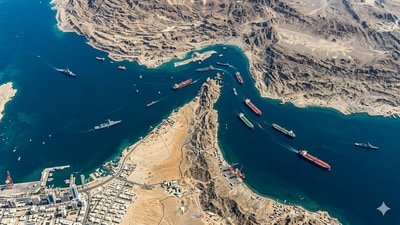
The United States has not formally instituted transit fees or tolls for passage through the Strait of Hormuz, though the concept has surfaced repeatedly in policy discussions. This market tests whether the US will establish and collect such charges—whether as a direct toll, a protection levy, or a reimbursement mechanism—by the end of 2026. The mechanism could involve direct collection from shipping companies, negotiated payments from allied governments, or in-kind arrangements tied to oil or cargo flows.
Historical precedent is sparse but instructive. The US has never charged systematic transit fees for international waterways under its influence, though it does maintain the world's largest naval presence in the region at considerable cost. Comparable cases include the Suez Canal Authority's tolls (Egypt) and historical proposals for "freedom of navigation" cost-sharing amongst NATO members. The 13% implied probability reflects scepticism about formal implementation within the timeframe, given the diplomatic friction such a policy would generate with trading partners and the legal complexity of establishing fees on international waters.
Traders should monitor statements from the US State Department and Department of Defense regarding Strait security funding, particularly any budget proposals or Congressional testimony linking operational costs to user-fee mechanisms. Recent shifts in US posture toward cost-sharing with Gulf allies (notably Saudi Arabia and the UAE) suggest the administration is exploring revenue models, though these have focused on military basing rather than transit charges. Watch for pilot programmes, bilateral agreements framing payments as "security contributions," or legislative proposals that would establish the administrative infrastructure for collection. Any formal announcement of a fee structure or initial collection would trigger resolution conditions.
Methodology
Methodologically we separate two layers: the live probability (Polymarket mid-price) and the platform attributes (fee, KYC, settlement currency, payment rails). That keeps the comparison honest — a single canonical probability across the row, with the venue-by-venue trade-offs spelt out in the columns next to it.
Resolution & payout
Settlement runs on-chain. Polymarket's contract logic separates YES and NO shares as conditional tokens; at resolution the winning share lifts to $1.00 and the losing one to $0. The outcome input comes from the UMA Optimistic Oracle, which secures against bad resolution with a bond + dispute window.
Once finalised, the smart contract pays USDC to the holders' wallets within minutes — no withdrawal fees beyond Polygon network gas. Kalshi settles in USD via CFTC clearance, Betfair in account currency net of commission, Manifold in play-money mana with no cash-out.
FAQ
- Is this market available outside the US?
- Polymarket itself is geo-blocked in the US/UK/EU. Always check the legal status of prediction markets in your jurisdiction before trading.
- How does resolution work?
- Through the UMA Optimistic Oracle on Polygon: a proposer submits the outcome, a two-hour challenge window opens, and USDC payouts settle automatically once the result is final.
- What's the difference between YES and NO shares?
- A YES share pays $1.00 if the event happens, $0 otherwise. A NO share pays $1.00 if the event doesn't happen. The market price between 0¢ and 100¢ is the implied probability.
- How fast are USDC deposits?
- Polygon credits deposits after 12 confirmations — usually under 30 seconds. Withdrawals follow the same path and land back in your wallet within minutes.
- How reliable are the quoted odds?
- The YES/NO percentages are the live mid-prices of the Polymarket order book. On deep markets they move every few seconds; on thinner ones you'll see short plateaus.
%22%2F%3E%3Cpath%20d%3D%22M%206%2066%20A%2026%2026%200%200%201%2058%2066%22%20fill%3D%22%23E6B98D%22%20opacity%3D%220.9%22%2F%3E%3Ccircle%20cx%3D%2232%22%20cy%3D%2226%22%20r%3D%2222%22%20fill%3D%22%23F5CBA7%22%2F%3E%3Crect%20x%3D%2214%22%20y%3D%224%22%20width%3D%2236%22%20height%3D%228%22%20rx%3D%224%22%20fill%3D%22%230ea5e9%22%2F%3E%3C%2Fsvg%3E) and
and%22%2F%3E%3Cpath%20d%3D%22M%206%2066%20A%2026%2026%200%200%201%2058%2066%22%20fill%3D%22%23E6B98D%22%20opacity%3D%220.9%22%2F%3E%3Ccircle%20cx%3D%2232%22%20cy%3D%2226%22%20r%3D%2222%22%20fill%3D%22%23F5CBA7%22%2F%3E%3Cpolygon%20points%3D%2216%2C18%2020%2C4%2024%2C18%22%20fill%3D%22%230ea5e9%22%2F%3E%3Cpolygon%20points%3D%2224%2C18%2028%2C3%2032%2C18%22%20fill%3D%22%230ea5e9%22%2F%3E%3Cpolygon%20points%3D%2232%2C18%2036%2C3%2040%2C18%22%20fill%3D%22%230ea5e9%22%2F%3E%3Cpolygon%20points%3D%2240%2C18%2044%2C4%2048%2C18%22%20fill%3D%22%230ea5e9%22%2F%3E%3C%2Fsvg%3E)
Trade US charges Hormuz fees by 2026? on Polymarket Bot UK
Live order book, 0% fees, USDC settlement in seconds.
Open live market →