Market statistics
- Total volume
- $547K
- 24h volume
- $116K
- Liquidity
- $173K
- Open interest
- $183K
Platform comparison
| Platform | YES odds | NO odds | Fee | KYC | Settlement | |
|---|---|---|---|---|---|---|
Polymarket (via PolyGram) Pick polygram.ink (preferred broker) |
77% | 23% | 0% (USDC on-chain) | No-KYC up to $1,500 | USDC, auto via UMA oracle | Place a position → |
Polymarket (direct) polymarket.com |
77% | 23% | 0% | Geo-blocked in US/UK/EU | USDC, on-chain | Place a position → |
Kalshi kalshi.com |
— | — | Up to 7% per trade | US-only, KYC required | USD | Place a position → |
Betfair Exchange betfair.com |
— | — | 2-5% commission | Full KYC from first trade | GBP / EUR | Place a position → |
Manifold Markets manifold.markets |
— | — | Play-money (mana) | None — play-money | Mana (no cash-out) | Place a position → |
Outcome snapshot
Current YES/NO probability from the live order book.
Market context
The Strait of Hormuz handles roughly one-third of global seaborne oil trade, making transit volumes a sensitive barometer of regional stability and energy markets. A 7-day moving average of 60+ daily arrivals represents near-normal throughput; the strait typically processes 80–100 transits daily during stable periods. This market requires IMF Portwatch data specifically, which publishes with a lag and covers container, tanker, bulk, and general cargo vessels. Programmatic traders should build monitoring around IMF Portwatch's publication schedule rather than real-time AIS feeds, since resolution depends on their official figures.
Historical precedent matters here: the strait experienced significant traffic disruptions during the 2022 tanker seizures and 2024 Houthi attacks on shipping, with moving averages dipping to 40–50 transits. Recovery typically follows diplomatic de-escalation or improved security corridors rather than sudden normalisation. The 77% implied probability reflects confidence that 18 months (through end-2026) provides sufficient runway for throughput to stabilise, though geopolitical risk remains structural. Traders should monitor Iranian nuclear negotiations, US–Iran relations, and Houthi operational capability as leading indicators; recent statements from shipping insurers and regional authorities on corridor safety are equally material.
Conditional order logic here would track IMF Portwatch releases weekly, triggering alerts when the 7-day average approaches 60. The resolution is binary and data-dependent, making this suitable for automated monitoring rather than discretionary timing. Note that a single week above 60 resolves the market to Yes, so traders should distinguish between temporary spikes and sustained normalisation when sizing positions.
Wikipedia Context
-
 Strait of Hormuz
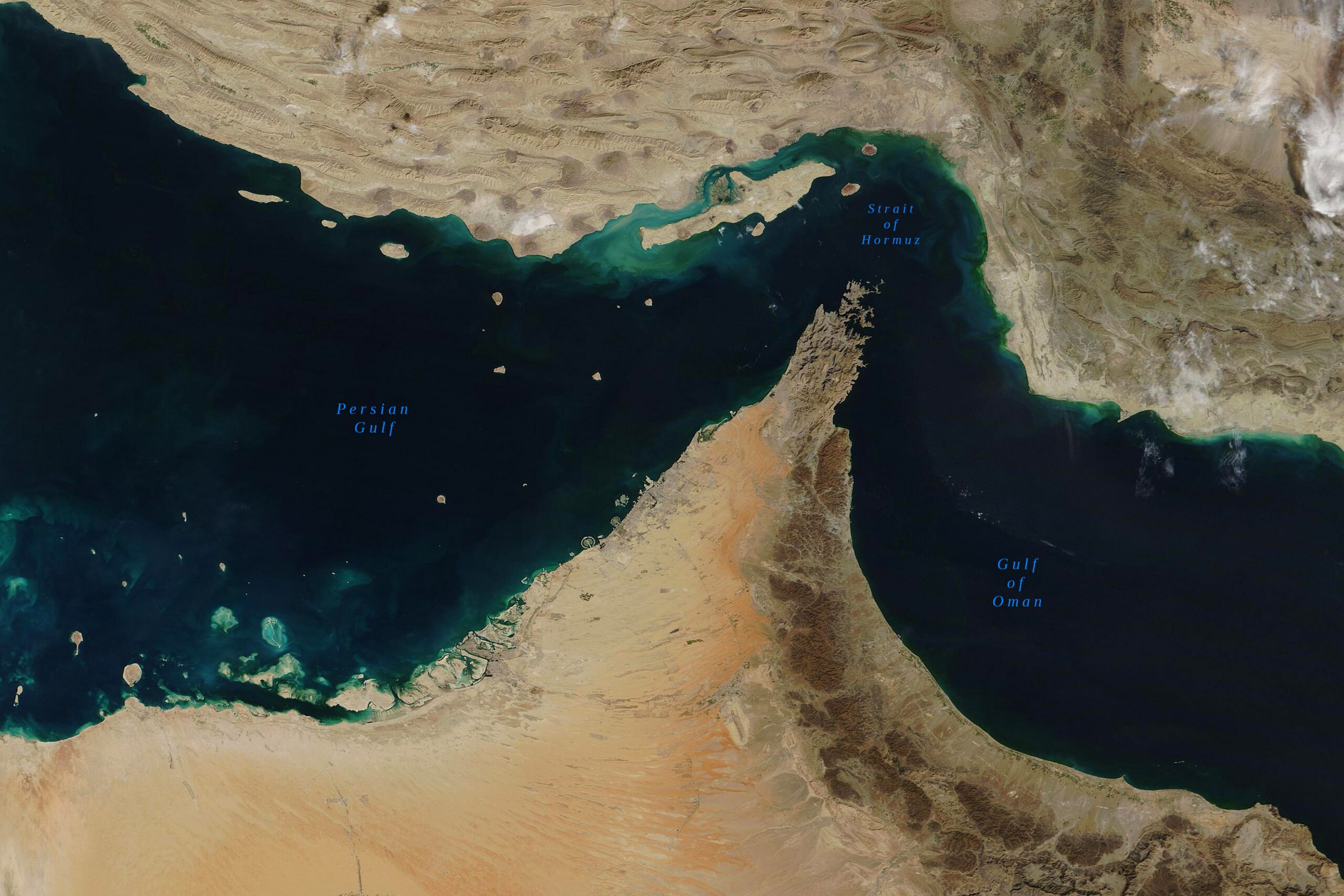
The Strait of Hormuz is a waterway between the Persian Gulf and the Gulf of Oman. On the north coast lies Iran, and on the south coast lies the Musandam Peninsula under the Musandam Governorate of Oman, with a portion of the southwest of the peninsula under the United Arab Emirates. The strait is about 104 miles long, with a width varying from about 60 mi to
-
 Battle of the Strait of Hormuz (1553)
The Battle of the Strait of Hormuz was fought in August 1553 between an Ottoman fleet, commanded by Admiral Murat Reis, against a Portuguese fleet of Dom Diogo de Noronha. The Turks were forced to retreat after clashing with the Portuguese.
-
 2026 Strait of Hormuz crisis
Shipping traffic through the Strait of Hormuz, a major maritime choke point for world energy trade, has been largely blocked by Iran since 28 February 2026, when the United States and Israel launched an air war against Iran and assassinated its supreme leader, Ali Khamenei. In retaliation, Iran launched missile and drone attacks on Israel, US military bases,
Methodology
This page reviews Strait of Hormuz traffic returns to normal by December 31? across five venues. The live probability is the Polymarket mid-price, sourced directly from the on-chain Polygon order book; the comparison columns benchmark each venue on fee structure, KYC, settlement currency and payment rails. Every CTA routes to PolyGram, which mirrors the Polymarket order book at 0% fees.
Resolution & payout
Polymarket-based markets settle through the UMA Optimistic Oracle on Polygon. A proposer submits the outcome, a two-hour challenge window opens, and unchallenged proposals finalise the resolution. Payouts settle automatically in USDC the moment the result is final — no bookmaker, no delay.
Kalshi-based markets settle in USD via the CFTC-regulated clearinghouse. Betfair Exchange settles in GBP/EUR net of commission. Manifold is play-money and does not pay out real funds.
FAQ
- Where can I trade this market with the lowest fees?
- Polymarket is geo-blocked in the US/UK/EU. The easiest 0%-fee broker into the same order book is PolyGram. Kalshi charges up to 7% per trade; Betfair Exchange takes 2-5% commission on net winnings.
- Is this market available outside the US?
- Polymarket itself is geo-blocked in the US/UK/EU. Always check the legal status of prediction markets in your jurisdiction before trading.
- How does resolution work?
- Through the UMA Optimistic Oracle on Polygon: a proposer submits the outcome, a two-hour challenge window opens, and USDC payouts settle automatically once the result is final.
- How fast are USDC deposits?
- Polygon credits deposits after 12 confirmations — usually under 30 seconds. Withdrawals follow the same path and land back in your wallet within minutes.
- How reliable are the quoted odds?
- The YES/NO percentages are the live mid-prices of the Polymarket order book. On deep markets they move every few seconds; on thinner ones you'll see short plateaus.
Trade Strait of Hormuz traffic returns to normal by Decemb… on PolyGram
Live order book, 0% fees, USDC settlement in seconds.
Open live market →