Platform comparison
| Platform | YES odds | NO odds | Fee | KYC | Settlement | |
|---|---|---|---|---|---|---|
Polymarket (via Polymarket Bot UK) Pick polygram.ink (preferred broker) |
18% | 82% | 0% (USDC on-chain) | No-KYC up to $1,500 | USDC, auto via UMA oracle | Place a position → |
Polymarket (direct) polymarket.com |
18% | 82% | 0% | Geo-blocked in US/UK/EU | USDC, on-chain | Place a position → |
Kalshi kalshi.com |
— | — | Up to 7% per trade | US-only, KYC required | USD | Place a position → |
Betfair Exchange betfair.com |
— | — | 2-5% commission | Full KYC from first trade | GBP / EUR | Place a position → |
Manifold Markets manifold.markets |
— | — | Play-money (mana) | None — play-money | Mana (no cash-out) | Place a position → |
Outcome probabilities
Current market-implied probability for each outcome, from the live order book.
| Outcome | Probability |
|---|---|
| US | 18% |
| UK | 8% |
| Germany | 8% |
| France | 7% |
| Netherlands | 5% |
| Italy | 5% |
| Greece | 3% |
| Australia | 1% |
Market context
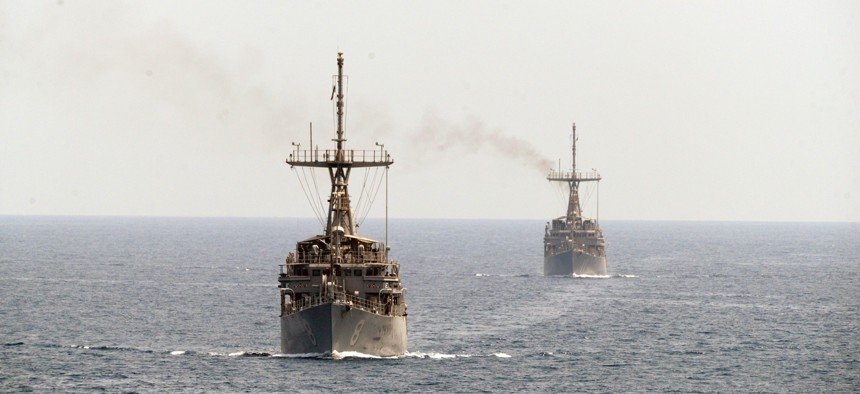
The event is a **national warship** transiting the Strait of Hormuz before 31 August 2026, so the market is really about whether any navy publicly sends a military vessel through that chokepoint and whether it is reported clearly enough to meet the resolution rule. Reuters said on 4 August that traffic through Hormuz was still running at a low level, with only six vessels crossing on the sampled day and the flow remaining “largely slow” while US-Iran talks stayed ambiguous.[1]
The current 8% price makes sense if you treat this as a low-frequency, escalation-sensitive event rather than a normal shipping flow question. Since February and March, the waterway has been repeatedly described as effectively constrained, with daily crossings collapsing from pre-crisis levels above 100 to single digits in some periods, while some reporting says only selected neutral commercial ships have been allowed through case by case.[3][9][13] For a programmatic workflow, the key is to track not just generic vessel counts but explicit military and government statements, plus credible wire reporting that names the ship, flag, and route; otherwise a passing naval deployment in the wider Gulf will not settle the market.
The main catalysts to monitor are diplomatic shifts, any US or Iranian maritime announcements, and sudden changes in tanker routing or security posture that could create an opening for naval escorts or demonstrative transits. Reuters has already tied current traffic levels to the uncertain pace of US-Iran talks, and the same reporting shows how quickly conditions can change when negotiations or strikes alter the risk calculus.[1] A bot setup would typically watch Reuters-style headlines, official defence ministry releases, and live AIS or Kpler-style movement data for vessels tagged as warships, then trigger alerts only if the transits are through the Strait itself rather than adjacent Gulf waters.[1][17]
Methodology
Methodologically we separate two layers: the live probability (Polymarket mid-price) and the platform attributes (fee, KYC, settlement currency, payment rails). That keeps the comparison honest — a single canonical probability across the row, with the venue-by-venue trade-offs spelt out in the columns next to it.
Resolution & payout
Settlement runs on-chain. Polymarket's contract logic separates YES and NO shares as conditional tokens; at resolution the winning share lifts to $1.00 and the losing one to $0. The outcome input comes from the UMA Optimistic Oracle, which secures against bad resolution with a bond + dispute window.
Once finalised, the smart contract pays USDC to the holders' wallets within minutes — no withdrawal fees beyond Polygon network gas. Kalshi settles in USD via CFTC clearance, Betfair in account currency net of commission, Manifold in play-money mana with no cash-out.
UK Frequently Asked Questions
- Where can I trade this market with the lowest fees?
- Polymarket is geo-blocked in the US/UK/EU. The easiest 0%-fee broker into the same order book is Polymarket Bot UK. Kalshi charges up to 7% per trade; Betfair Exchange takes 2-5% commission on net winnings.
- What's the difference between YES and NO shares?
- A YES share pays $1.00 if the event happens, $0 otherwise. A NO share pays $1.00 if the event doesn't happen. The market price between 0¢ and 100¢ is the implied probability.
- Is Polymarket legal in the UK?
- Polymarket is accessible to UK traders but is not UKGC-licensed. It operates under US CFTC jurisdiction. UK residents face no domestic legal prohibition on using it, but UKGC consumer protections do not apply. For UKGC-regulated alternatives, Betfair Exchange and Smarkets offer similar prediction-style markets.
- Do I pay tax on prediction market profits in the UK?
- UKGC-licensed platform profits (Betfair, Smarkets) are typically tax-free gambling winnings for UK individuals. Polymarket profits involve USDC crypto transactions, which HMRC treats as Capital Gains Tax events. Keep full transaction records and report via Self Assessment if gains exceed £3,000 per tax year.
- How do I deposit on Polymarket from the UK?
- UK traders typically fund Polymarket via Coinbase UK, Kraken or Revolut — buying USDC with GBP and transferring to a Polygon-compatible wallet (MetaMask, Coinbase Wallet). Polymarket's onboarding walks you through the bridging process. Typical GBP-to-USDC conversion costs 0.5–1%.
%22%2F%3E%3Cpath%20d%3D%22M%206%2066%20A%2026%2026%200%200%201%2058%2066%22%20fill%3D%22%23E6B98D%22%20opacity%3D%220.9%22%2F%3E%3Ccircle%20cx%3D%2232%22%20cy%3D%2226%22%20r%3D%2222%22%20fill%3D%22%23F5CBA7%22%2F%3E%3Crect%20x%3D%2214%22%20y%3D%224%22%20width%3D%2236%22%20height%3D%228%22%20rx%3D%224%22%20fill%3D%22%230ea5e9%22%2F%3E%3C%2Fsvg%3E) and
and%22%2F%3E%3Cpath%20d%3D%22M%206%2066%20A%2026%2026%200%200%201%2058%2066%22%20fill%3D%22%23E6B98D%22%20opacity%3D%220.9%22%2F%3E%3Ccircle%20cx%3D%2232%22%20cy%3D%2226%22%20r%3D%2222%22%20fill%3D%22%23F5CBA7%22%2F%3E%3Cpolygon%20points%3D%2216%2C18%2020%2C4%2024%2C18%22%20fill%3D%22%230ea5e9%22%2F%3E%3Cpolygon%20points%3D%2224%2C18%2028%2C3%2032%2C18%22%20fill%3D%22%230ea5e9%22%2F%3E%3Cpolygon%20points%3D%2232%2C18%2036%2C3%2040%2C18%22%20fill%3D%22%230ea5e9%22%2F%3E%3Cpolygon%20points%3D%2240%2C18%2044%2C4%2048%2C18%22%20fill%3D%22%230ea5e9%22%2F%3E%3C%2Fsvg%3E)
Trade Which countries will send warships through the Strai… on Polymarket Bot UK
Live order book, 0% fees, USDC settlement in seconds.
Open live market →